





November 17, 2026
By ABE Editorial Desk
IKEA built one of the world’s most recognisable retail businesses around enormous suburban stores, affordable furniture and customers willing to travel for a bargain. Now, declining sales and changing shopping habits are forcing the Swedish retailer to reconsider that formula. Its response reveals how the economics of global retail are changing.
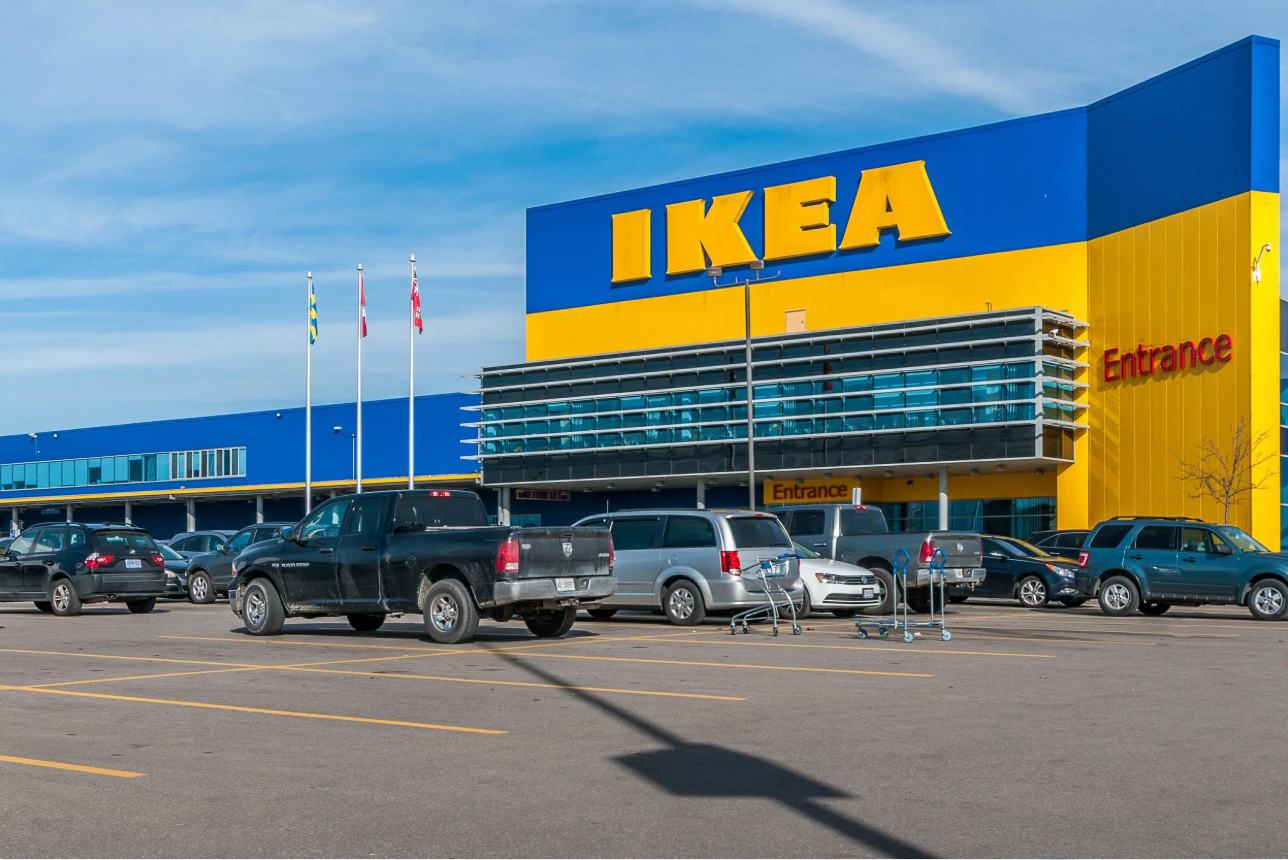
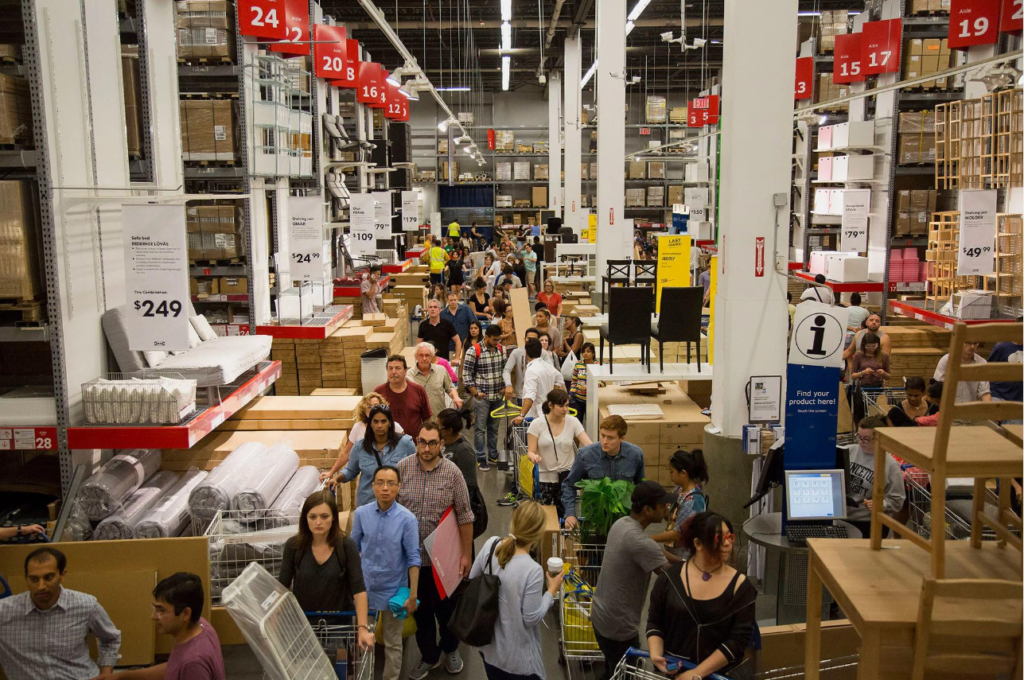
For decades, IKEA’s giant blue-and-yellow warehouses represented a distinctive approach to retail. Customers travelled to large stores, explored furnished showrooms and collected flat-packed products before assembling them at home. The system helped the company lower costs and bring Scandinavian-inspired furniture to millions of households.
That model remains central to IKEA’s identity. Yet the economics surrounding it have changed.
On November 17, Ingka Group, IKEA’s largest retail operator, reported €38.8 billion in annual retail sales for the financial year ending August 31, 2026. The figure declined from €39 billion the previous year, marking a third consecutive annual sales decline.
The IKEA global retail strategy now places greater emphasis on smaller stores, urban locations, digital shopping and lower prices. Management hopes these changes will attract customers who increasingly value convenience alongside affordability.
The challenge is substantial. IKEA must modernise its operations without sacrificing the efficiencies that made its traditional business successful.
IKEA’s Sales Decline Reveals a Changing Market
IKEA’s latest results highlight the pressure facing international furniture retailers.
Ingka Group operates most IKEA stores worldwide. Its annual retail sales declined to €38.8 billion, while customer visits to physical stores fell from 739 million to 729 million.
Digital engagement moved in the opposite direction. Online visits reached 4.2 billion, reflecting the growing importance of websites and digital services in the customer journey.
Across all IKEA franchisees, retail sales reached €43.8 billion in the 2026 financial year. That compares with €44.6 billion in 2025, a decline of approximately 1.9%.
The distinction matters because Ingka Group represents the largest IKEA retailer, not the entire global franchise system.
These figures suggest that IKEA faces more than a temporary slowdown at individual locations. The company must respond to broader changes in how households discover, compare and purchase furniture.
Consumers can now research products, compare prices and arrange deliveries without visiting a showroom.
Meanwhile, rising living costs have made large discretionary purchases more difficult for many households.
For IKEA, maintaining customer interest increasingly requires both competitive prices and easier access.
Why the Traditional Big-Box Model Is Under Pressure
IKEA’s traditional stores offer important advantages.
Their large footprints allow the company to display extensive product ranges, operate warehouses and support high-volume sales. Customers can examine furniture in realistic room settings before making purchases.
However, the model also demands considerable time and effort from shoppers.
Families often travel significant distances to suburban locations. They may also need suitable transportation to bring purchases home.
Higher fuel costs and changing lifestyles can make these trips less attractive.
Urban customers face additional obstacles, including traffic congestion, limited parking and smaller living spaces.
IKEA’s leadership recognises these pressures.
Chief executive Juvencio Maeztu has indicated that traditional large stores will remain central to the business. Nevertheless, smaller formats will offer greater convenience and bring the brand closer to customers.
This represents an evolution rather than an abandonment of IKEA’s original concept.
The company wants to preserve its established advantages while reducing the inconvenience associated with reaching its stores.
Manhattan and London Become Tests of a New Approach
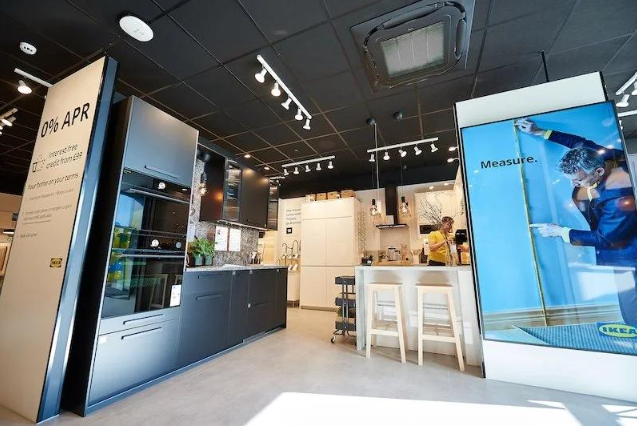
IKEA’s urban expansion illustrates how its strategy is changing.
The company plans to open a major location in Manhattan’s SoHo neighbourhood in early 2027. The investment follows the opening of its Oxford Street store in London, which management says helped support sales in the United Kingdom.
These locations serve a different purpose from traditional suburban warehouses.
City-centre stores can introduce IKEA to customers who might rarely visit larger outlets. They also allow shoppers to explore products, receive design assistance and arrange purchases closer to where they live or work.
During the 2026 financial year, Ingka Group opened 28 small stores and 64 planning-and-order points.
Such formats can extend the company’s reach without requiring every location to carry the inventory of a full-sized warehouse.
However, urban retail presents its own challenges.
Central locations often involve higher property and operating costs. Smaller premises also limit how many products retailers can display or store.
IKEA must therefore find a balance between convenience, customer demand and profitability.
The success of these stores will depend on whether additional sales justify their operating costs.
Affordability Returns to the Centre of IKEA’s Strategy
Price has always played a defining role in IKEA’s business.
The company built its reputation by offering functional furniture at prices accessible to a broad customer base.
However, inflation, housing expenses and higher borrowing costs have weakened household purchasing power in many markets.
Consumers may delay replacing furniture or prioritise essential purchases over home improvements.
IKEA has responded by increasing its focus on affordability.
In September, the company announced an additional €1.2 billion in price reductions across Europe.
Lower prices may help attract customers and increase sales volumes. Yet they can also place pressure on profit margins unless the company reduces costs elsewhere.
This creates a difficult commercial calculation.
Retailers must determine whether lower prices will generate enough additional demand to offset the revenue sacrificed on individual products.
For IKEA, supply-chain efficiency, product design and manufacturing costs remain critical to that equation.
The company must make furniture more affordable while protecting the financial strength needed to invest in its operations.
Digital Shopping Is Changing the Customer Relationship
IKEA’s growing online audience demonstrates the importance of digital retail.
With billions of online visits annually, the company’s website and digital services have become major customer contact points.
However, digital engagement does not automatically translate into purchases.
Customers may browse products, compare measurements or seek inspiration without completing an order.
Furniture also presents challenges that differ from smaller consumer goods.
Large products require transportation, storage, delivery coordination and sometimes installation.
Returns can be particularly expensive.
IKEA must therefore integrate digital shopping with efficient fulfilment and physical customer support.
Planning tools, delivery services and smaller consultation locations can help connect online research with completed purchases.
The wider objective is to make shopping more convenient without allowing service costs to undermine affordability.
A successful digital strategy must improve both the customer experience and the economics of each transaction.
Cost Reductions and the Pressure to Improve Efficiency
IKEA’s restructuring extends beyond store formats.
Ingka Group has reduced its workforce by at least 1,000 positions since the beginning of 2026 as part of its cost-cutting programme.
The company is also exploring ways to attract more visitors to existing suburban locations.
One approach involves allowing other retailers to operate within IKEA stores. Sporting goods retailer Decathlon opened a location inside IKEA’s Croydon store in 2026.
This strategy could help generate additional customer traffic while making large retail destinations more useful.
However, IKEA must ensure that outside retailers complement rather than weaken its own shopping experience.
The company’s financial performance also requires careful interpretation.
Ingka Group’s net profit increased from €1.4 billion to €1.9 billion despite weaker sales.
Much of that increase resulted from the sale of three shopping centres in China.
Consequently, the higher profit figure should not be interpreted as proof that IKEA’s core furniture business has returned to stronger growth.
Investors and industry observers must distinguish recurring retail performance from gains generated by asset sales.
What IKEA’s Transformation Means for Global Retail
IKEA’s decisions reflect a challenge confronting many established retailers.
Large physical stores once offered a clear advantage through product selection, purchasing scale and customer experience.
Today, consumers expect businesses to combine those strengths with digital convenience and flexible delivery.
Retailers must operate across multiple channels while controlling increasingly complex costs.
For furniture companies, the challenge is particularly demanding because products are bulky and purchases occur less frequently than everyday shopping.
IKEA’s scale provides significant advantages, including established supplier relationships, brand recognition and international distribution networks.
Yet scale can also make change expensive.
Opening new store formats, improving digital systems and adjusting logistics operations require substantial investment.
Competitors will face similar pressures, although their responses may differ.
Some may focus on online sales, while others invest in smaller showrooms or specialised customer services.
IKEA’s performance will offer an important indication of whether a traditional global retailer can successfully adapt its business model.
THE ABE TAKE
IKEA’s transformation illustrates a fundamental principle of modern business: a successful model can remain valuable even when the conditions supporting it begin to change.
The company’s large suburban stores helped make affordable furniture accessible to millions of households. That achievement remains significant.
However, affordability alone no longer guarantees customer loyalty.
Convenience, digital access, transportation costs and household financial pressures increasingly influence purchasing decisions.
IKEA’s challenge is to adapt without losing the operational discipline that made its products competitive.
Smaller stores may attract new customers, but they introduce different cost structures. Digital shopping can expand reach, yet fulfilment and returns may reduce profitability.
Lower prices can stimulate demand, although sustained reductions require efficiency improvements.
The company’s recent profit increase also demonstrates why financial results require careful examination. Gains from asset sales do not necessarily indicate stronger underlying retail operations.
For ABE Magazine, the broader significance extends beyond furniture.
IKEA represents a generation of global retailers confronting the limits of business models developed under different consumer expectations.
Its next phase will test whether established companies can preserve their competitive advantages while changing how they serve customers.
The most successful retailers may not be those with the largest stores or the most advanced websites.
They may be the companies that combine affordability, accessibility and operational efficiency without allowing one objective to undermine the others.
ABE MAGAZINE
Understand More. Think Bigger.