







The Hook
When most people hear the words artificial intelligence, they think of chatbots.
Writing assistants.
Image generators.
Virtual assistants.
But the biggest AI revolution may not happen on your laptop.
It may happen on the factory floor.
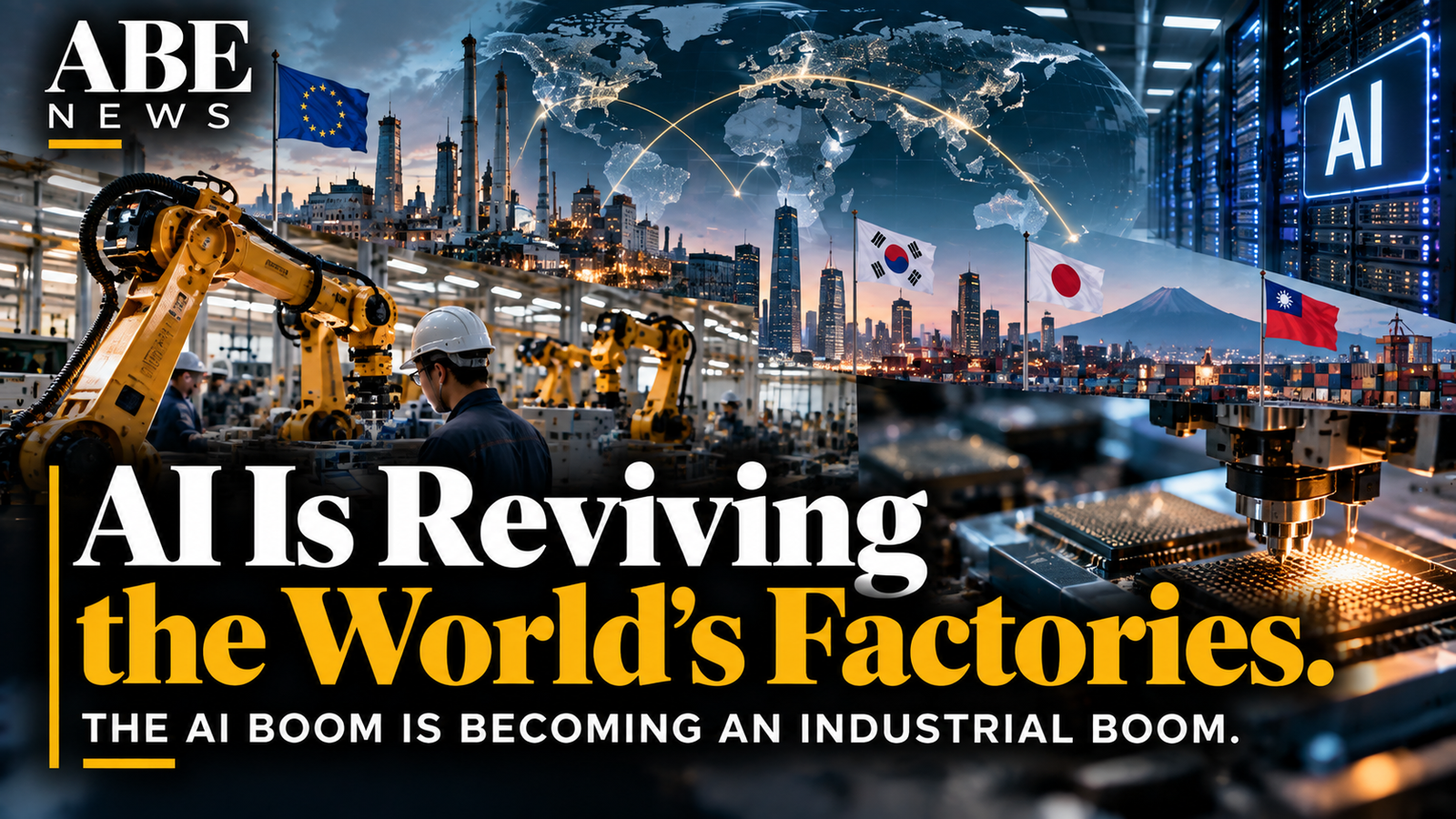
Across the industrial world, companies are quietly investing billions to make factories smarter, faster and more efficient. And one company is showing just how significant that shift has become.
The Story
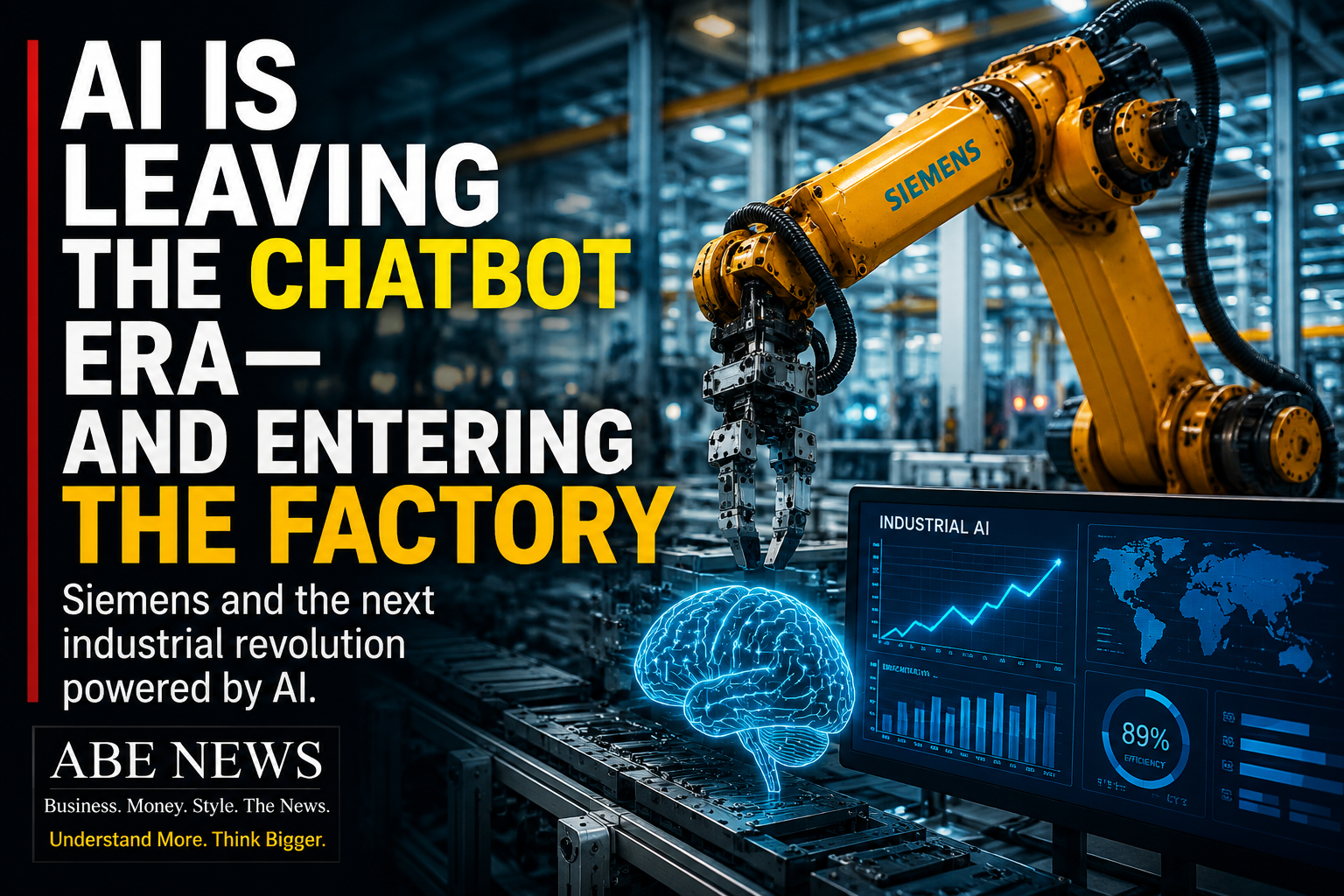
German industrial giant Siemens has reported its highest-ever quarterly industrial profit, driven largely by booming demand for AI-related infrastructure.
The company posted industrial profit of €3.52 billion, up 25% from a year earlier, while total orders climbed 13% to a record €27.9 billion. Siemens also raised its earnings outlook for the rest of the year after stronger-than-expected demand from industries investing in AI, data centres and smart infrastructure.
One detail stood out.
Siemens says it now works with nine of the world’s ten largest data-centre operators, placing the company at the centre of one of the fastest-growing parts of the AI economy.
AI’s Next Chapter
The first wave of AI captured public attention.
People used it to write emails.
Generate images.
Summarize documents.
Answer questions.
The next wave is different.
It focuses on physical industries.
Factories.
Power grids.
Transport systems.
Buildings.
Manufacturing.
Instead of helping people write faster, industrial AI helps companies build products more efficiently.
It can predict machine failures before they happen.
Reduce waste.
Improve quality.
Lower energy consumption.
And keep production lines running more smoothly.
Why Investors Are Paying Attention
When people think about AI companies, names like OpenAI, NVIDIA or Microsoft usually come to mind.
But AI creates opportunities far beyond software.
Industrial companies that provide electrical equipment, automation systems, sensors and factory software are becoming critical suppliers to the AI economy.
That means the companies building the infrastructure behind AI may become just as important as the companies creating the AI itself.
A Bigger Industrial Shift
The demand isn’t coming from one sector.
It’s coming from many.
Electronics manufacturers.
Cloud providers.
Industrial companies.
Data-centre operators.
Utilities.
Governments investing in energy infrastructure.
All of these industries need smarter systems capable of handling increasingly complex operations.
That is creating new opportunities for companies that combine engineering with artificial intelligence.
Why It Matters
For years, AI was mostly viewed as a software story.
Today, it is becoming an industrial story.
Countries that successfully modernize their factories could improve productivity, strengthen manufacturing and become more competitive in global trade.
Businesses that invest wisely in industrial AI may also reduce costs while increasing output.
The impact could extend far beyond technology companies.
What’s Next?
The AI infrastructure race is still accelerating.
Demand for data centres, industrial software, smart factories and advanced electrical systems continues to grow.
The companies supplying that infrastructure are likely to remain at the centre of the next phase of AI investment.
The biggest winners of the AI era may not always be the businesses creating the headlines.
Sometimes, they’re the ones quietly building the foundation beneath them.
THE ABE NEWS TAKE
The first chapter of AI was about possibility.
The second chapter is about productivity.
History shows that transformative technologies become truly powerful when they move beyond demonstrations and begin solving real-world problems.
Electricity transformed factories.
The internet transformed communication.
Artificial intelligence may transform how the world manufactures almost everything.
That’s why industrial companies deserve more attention.
They may not create the chatbots people talk about.
But they are helping build the economy those chatbots will eventually operate in.
And that could become one of the biggest business stories of the next decade.
ABE NEWS
Business. Money. Style. The News.
Understand More. Think Bigger.
Sources
- Reuters — Siemens posts record industrial profit as AI demand drives growth.