







November 17, 2026
By ABE Editorial Desk
The struggle for influence in Asia is no longer confined to military alliances or diplomatic negotiations. It increasingly involves critical minerals, artificial intelligence, shipping routes and the infrastructure connecting national economies. As Donald Trump meets the leaders of India, Japan and Australia in Manila, Washington is attempting to demonstrate that its regional partnerships remain strong. China, meanwhile, continues to exercise enormous economic influence across the same region.
Four leaders gathered in Manila on Tuesday for a meeting whose significance extends far beyond the Philippines.
United States President Donald Trump joined Indian Prime Minister Narendra Modi, Japanese Prime Minister Sanae Takaichi and Australian Prime Minister Anthony Albanese for the first Quad leaders’ summit in two years.
Their discussions took place against a backdrop of mounting economic competition between Washington and Beijing, renewed restrictions on advanced technology and growing concerns about maritime security.
The Quad summit in Manila produced commitments covering supply chains, cybersecurity, maritime surveillance and technological cooperation.
The timing was particularly important. Trump is preparing for talks with Chinese President Xi Jinping during the Asia-Pacific Economic Cooperation meetings in Shenzhen.
Washington wants to demonstrate that its regional influence extends beyond bilateral negotiations with Beijing.
For Asian governments, however, the challenge is more complicated. Many rely on American security cooperation while maintaining extensive commercial relationships with China.
The summit therefore raises a larger question: can the United States strengthen its regional partnerships without forcing Asian countries into an increasingly costly geopolitical division?
The Quad Returns to the Centre of American Diplomacy
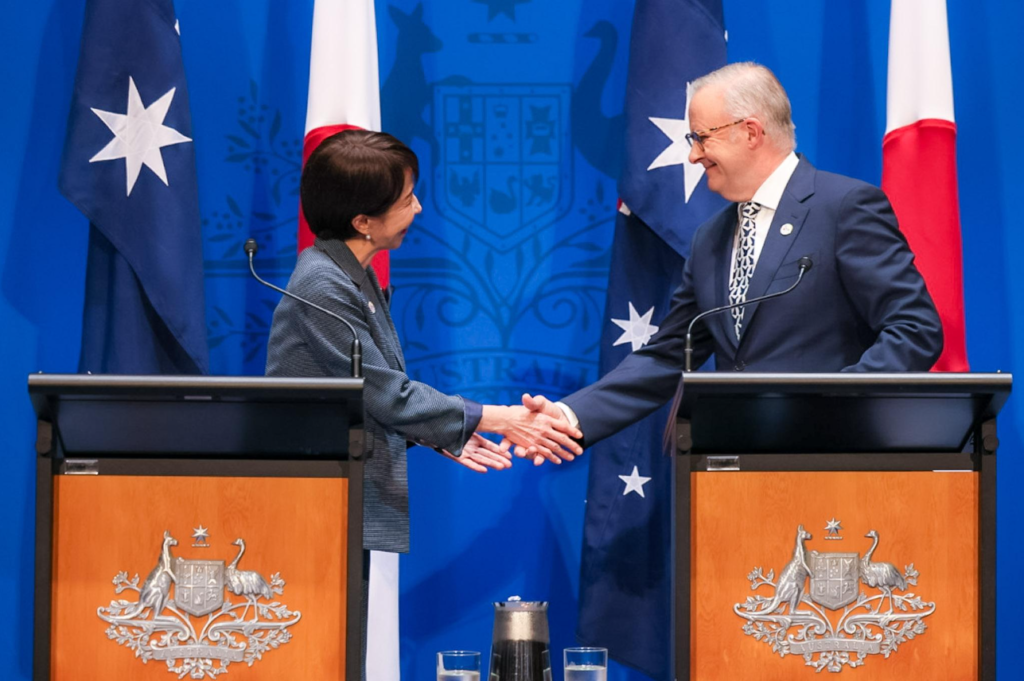
The Quadrilateral Security Dialogue brings together the United States, India, Japan and Australia.
Although the grouping does not constitute a formal military alliance, its members share concerns about maritime security, economic resilience and the stability of the Indo-Pacific.
The Manila meeting marked Trump’s first Quad leaders’ summit since returning to the presidency.
Its joint statement emphasised opposition to coercive actions that could destabilise the region, including efforts to change the status quo through force.
The leaders also expressed concern about economic pressure exercised through export restrictions.
Their commitments extended beyond diplomatic language.
The four governments announced plans for a business leaders’ forum in early 2027, expanded maritime surveillance cooperation and further initiatives involving secure communications infrastructure.
These measures reflect an effort to make the Quad more operationally relevant.
Instead of relying exclusively on political declarations, its members want cooperation to produce practical economic and security benefits.
The effectiveness of those initiatives will depend on implementation, funding and continued political commitment.
China’s Economic Influence Creates a Strategic Dilemma
China remains central to Asia’s economic development.
Its manufacturing capacity, consumer market and investment relationships connect it to economies throughout Southeast Asia.
For members of the Association of Southeast Asian Nations, China represents both an important commercial partner and a source of strategic concern.
Many governments seek stronger American security engagement while remaining unwilling to sacrifice access to Chinese markets.
That tension was evident during the Manila meetings.
Chinese Premier Li Qiang defended international trade cooperation and urged regional governments to resist economic fragmentation.
Meanwhile, Japan called for stronger regional supply chains and greater resilience against export restrictions.
These positions reveal competing priorities.
Washington and its partners increasingly emphasise security and reduced dependence on strategically sensitive suppliers.
Beijing presents itself as an essential participant in regional economic growth and trade integration.
Neither position eliminates the other.
Asian economies must navigate a commercial system in which economic opportunity and geopolitical vulnerability frequently overlap.
Critical Minerals Become Instruments of Economic Power
One of the most consequential areas of competition involves critical minerals.
These materials support industries ranging from electric vehicles and renewable energy to advanced electronics and defence equipment.
China occupies an influential position in several mineral-processing and manufacturing supply chains.
That influence can become strategically significant when governments restrict exports or when businesses fear interruptions to supply.
The Quad leaders identified supply-chain resilience as a central priority.
Their statement expressed concern about arbitrary export restrictions and supported stronger economic cooperation among member countries.
However, building alternative supply chains presents major challenges.
New mining projects require financing, regulatory approval and infrastructure. Processing facilities demand specialised expertise and substantial investment.
Companies also need predictable long-term demand before committing capital.
Consequently, reducing dependence on concentrated supply chains cannot happen through diplomatic agreements alone.
It requires years of industrial development and coordination between governments and private businesses.
Maritime Security Moves Beyond Military Competition
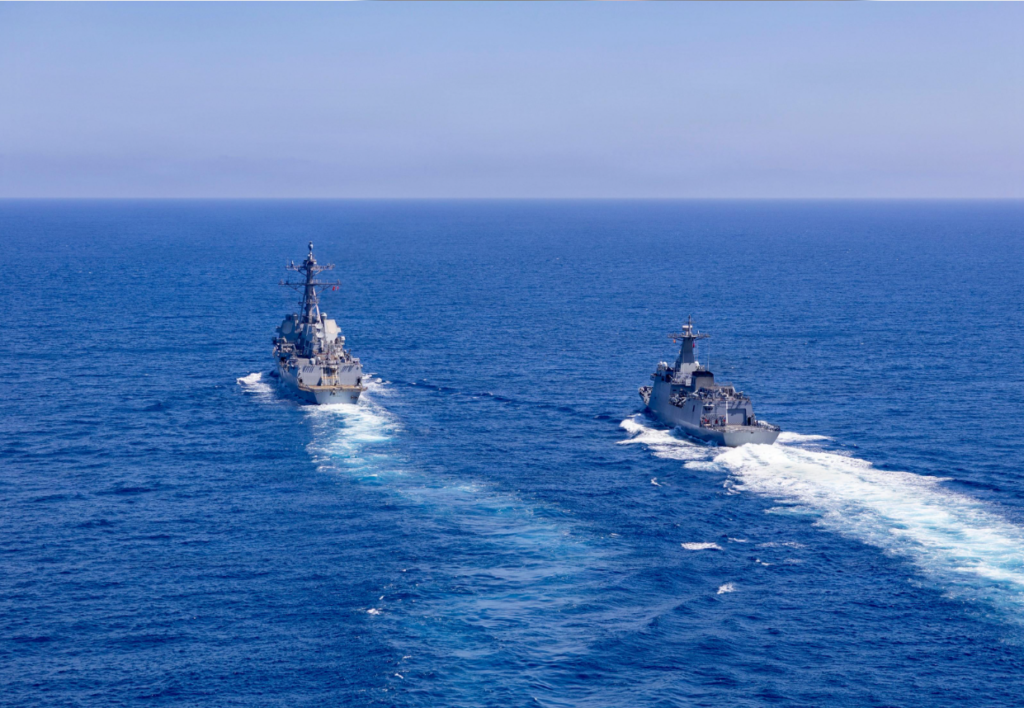
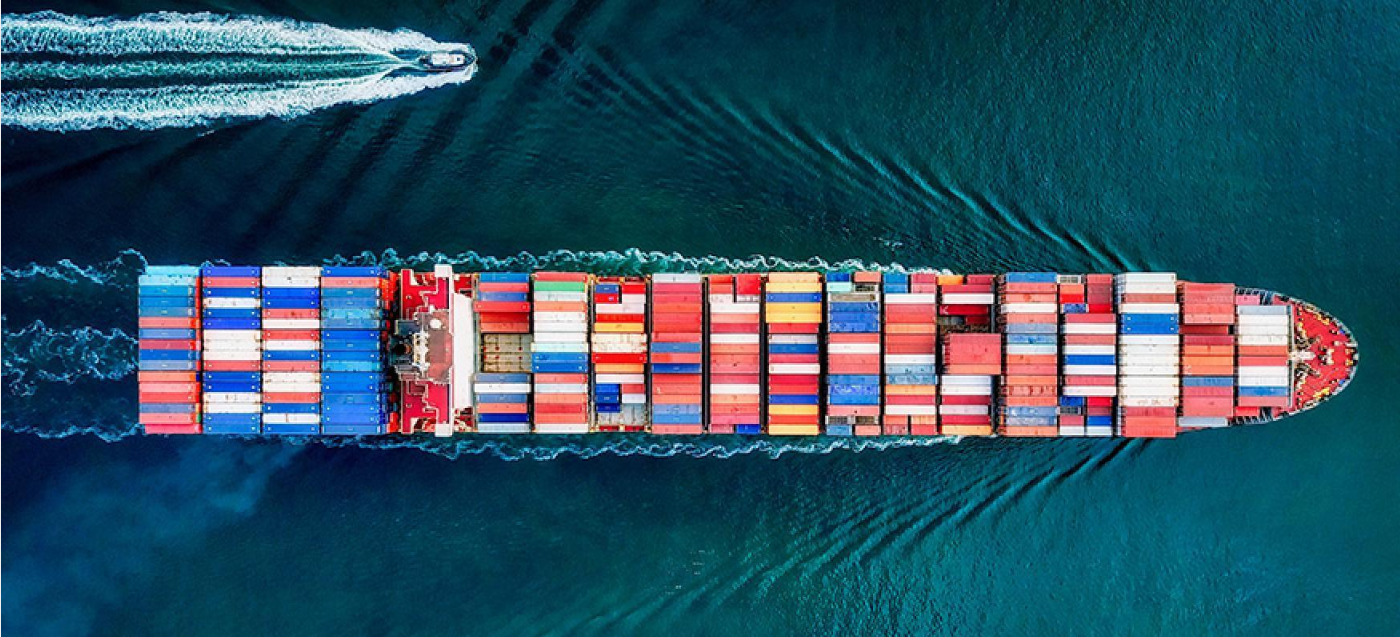
The Indo-Pacific contains some of the world’s most important shipping routes.
Commercial vessels transport energy, manufactured goods, agricultural products and industrial materials through waters essential to international trade.
Disruptions in these corridors can affect freight costs, delivery schedules and global supply chains.
The Quad announced a new maritime surveillance collaboration intended to improve information sharing and regional awareness.
Its members also plan a maritime exercise involving P-8 and P-3C patrol aircraft in 2027.
The initiative reflects growing concern about maritime stability.
Disputes in the South China Sea continue to generate tension between China and several Southeast Asian governments.
Regional states have repeatedly emphasised freedom of navigation and the peaceful resolution of disputes.
For businesses, these concerns are not abstract.
Shipping companies, insurers and exporters depend on predictable access to international waterways.
A serious confrontation could raise transportation costs and undermine confidence in regional trade.
The Quad’s challenge is to strengthen maritime security without contributing unnecessarily to military escalation.
Technology Competition Expands the Strategic Agenda
The summit also highlighted the growing importance of advanced technology.
The four governments endorsed an initiative intended to coordinate access to trusted advanced intelligence systems and related technical assistance.
They also announced expanded cybersecurity cooperation and continued support for resilient communications infrastructure.
These commitments arrive as Washington and Beijing impose competing restrictions on sensitive technologies.
The United States has introduced new controls affecting China’s access to advanced artificial intelligence chips.
China has criticised those restrictions and warned that it may respond.
Technology policy has therefore become closely connected to national security and international trade.
For companies operating across borders, this creates uncertainty about equipment access, investment restrictions and future regulatory requirements.
Governments must balance technological innovation with concerns about security, dependence and commercial competitiveness.
The outcome could influence where advanced manufacturing facilities are built and which countries participate in emerging technology ecosystems.
Southeast Asia Refuses to Become a Passive Battleground
The Philippines provided the setting for the Quad meeting, but Southeast Asian governments have their own priorities.
The ASEAN summit addressed regional conflicts, economic uncertainty and the consequences of wider international tensions.
Philippine President Ferdinand Marcos Jr. emphasised the importance of cooperation in a period of instability.
ASEAN governments must also confront challenges involving Myanmar, maritime disputes and economic development.
Many seek investment and security assistance from multiple international partners.
They are not necessarily interested in choosing one major power at the expense of another.
This makes regional diplomacy more complicated than a straightforward contest between Washington and Beijing.
Countries such as Indonesia, Vietnam, Malaysia and Thailand possess different economic structures, security interests and diplomatic relationships.
Their decisions will influence whether the Indo-Pacific develops a more divided economic order or maintains overlapping partnerships.
The region’s future will depend partly on whether major powers respect those national interests.
Trump’s China Talks Will Test the Limits of Cooperation
The Manila summit precedes Trump’s planned meetings in Shenzhen, where Xi Jinping will host the APEC gathering.
Washington and Beijing face several unresolved disputes, including trade restrictions, advanced technology and strategic competition.
The United States also maintains important security commitments to countries concerned about China’s regional behaviour.
These issues complicate negotiations.
A temporary trade understanding may reduce immediate economic pressure without resolving deeper disagreements.
At the same time, confrontational policies could create costs for both economies and their international partners.
Trump’s meetings in Asia therefore carry two different diplomatic objectives.
He wants to reassure American partners that Washington remains engaged in regional security.
He must also manage a relationship with China that remains essential to global trade and economic stability.
Success in one area does not automatically guarantee progress in the other.
THE ABE TAKE
The Manila summit reveals a fundamental change in the nature of international power.
Military strength remains important, but governments increasingly compete through supply chains, technology standards, financial relationships and control over strategic infrastructure.
The Quad’s renewed activity reflects this transformation.
Its members recognise that economic dependence can create vulnerabilities as consequential as traditional security threats.
Yet building resilience requires more than identifying China as a competitor.
Alternative supply chains must become commercially viable. Technology partnerships must deliver measurable benefits. Maritime cooperation must improve security without unnecessarily escalating tensions.
The United States also faces a credibility challenge.
Regional governments want reliable American engagement, but many remain concerned about unpredictable trade policies and the possibility that strategic priorities could change.
China, meanwhile, retains substantial economic influence that cannot simply be removed through diplomatic coordination.
For ABE Magazine, the most important question is not which power dominates the next summit.
It is whether Asian governments can preserve economic opportunity while protecting their independence in a more competitive international system.
The Indo-Pacific’s future will not be determined exclusively in Washington or Beijing.
It will also depend on the decisions of countries seeking to maintain commercial relationships, strengthen their security and avoid becoming instruments of another government’s geopolitical strategy.
The contest for Asia’s future is ultimately a contest over who can offer countries greater security, economic opportunity and freedom of choice.
ABE MAGAZINE
Understand More. Think Bigger.