







The final full week of November exposed the increasingly complex environment facing international businesses. Renewed American tariff proposals unsettled global markets, inflation continued to influence consumer spending, and major economies presented contrasting growth prospects. As December approaches, corporate leaders face difficult decisions about investment, expansion and financial resilience.
By ABE Editorial Desk | ABE Magazine
Friday, November 27, 2026
Weekly reporting period: November 23–27, 2026
THE UNITED STATES | Washington Revives Global Trade Uncertainty
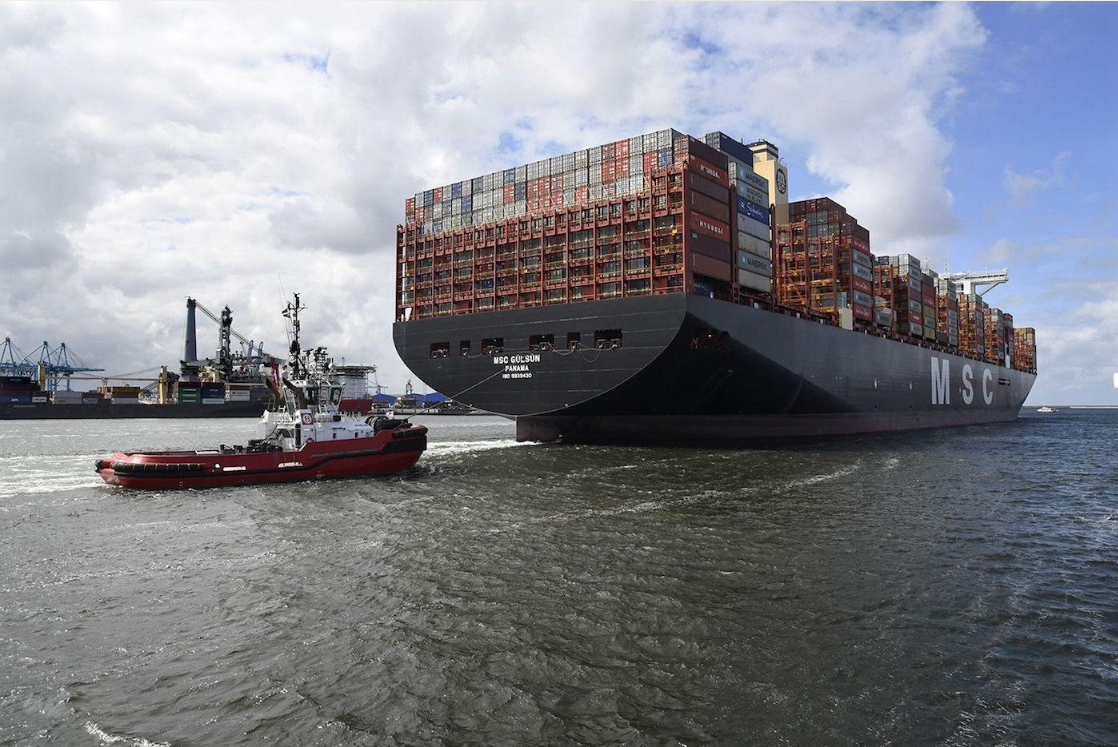
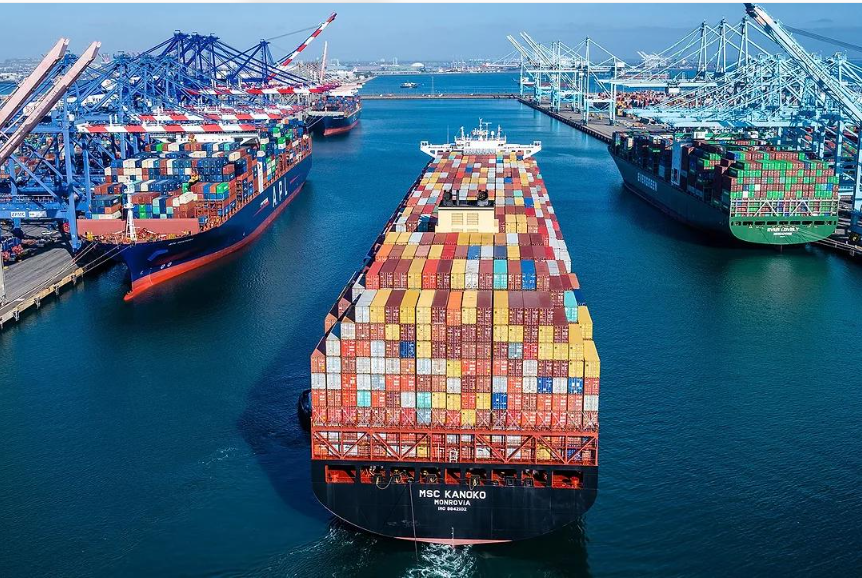
International trade returned to the centre of economic discussions this week after the Trump administration unveiled new tariff proposals targeting 14 trading partners. The proposed measures are intended to address what Washington considers excessive industrial production capacity in foreign economies. Potential maximum tariff rates range from 20% to 40%, although the administration intends to respect lower limits established through relevant trade negotiations. The proposals introduce another layer of uncertainty for manufacturers, importers and multinational corporations preparing their commercial strategies for 2027.
The announcement demonstrates how international trade policy is increasingly influenced by domestic industrial objectives. Governments are seeking to protect manufacturing capabilities, strengthen supply chains and reduce dependence on foreign production. However, businesses operating across international markets must consider the financial consequences of these policies. Tariffs can increase production expenses, complicate supplier relationships and ultimately influence consumer prices.
American monetary policy presents another challenge for corporate leaders. New York Federal Reserve President John Williams indicated on Monday that persistent inflation could require additional interest rate increases. This creates uncertainty for businesses that had anticipated more favourable borrowing conditions. Companies with substantial financing requirements may consequently reconsider expansion plans while waiting for greater clarity on monetary policy.
EUROPE | Businesses Navigate Slower Growth and Monetary Pressure
European businesses are approaching the end of the year amid continuing concerns about growth, inflation and competitiveness. In the United Kingdom, preliminary purchasing managers’ data indicated that private-sector expansion slowed slightly in November. Although economic activity continued to grow, weaker overseas demand presented difficulties for some businesses. The figures reinforce the importance of international trade relationships to Britain’s longer-term economic performance.
Monetary policy also remained a significant issue within the eurozone. European Central Bank policymaker Gediminas Šimkus suggested that a potential December interest rate increase might not be sufficient to contain inflation, although he indicated there was no immediate need to rush further decisions. Meanwhile, news that Spanish central banking veteran Pablo Hernández de Cos would become the next ECB president suggested continuity in the institution’s policy direction. European businesses must therefore continue planning around potentially restrictive financing conditions.
The region’s broader challenge involves maintaining industrial competitiveness while managing energy expenses, regulatory requirements and weaker demand in certain markets. Manufacturers face growing pressure to modernize their operations and improve productivity without significantly increasing financial exposure. Businesses with international operations must also evaluate how changes in American trade policy could affect their European production networks. These factors are likely to influence corporate investment decisions well into 2027.
ASIA-PACIFIC | Singapore Strengthens Its Outlook as China Supports Markets
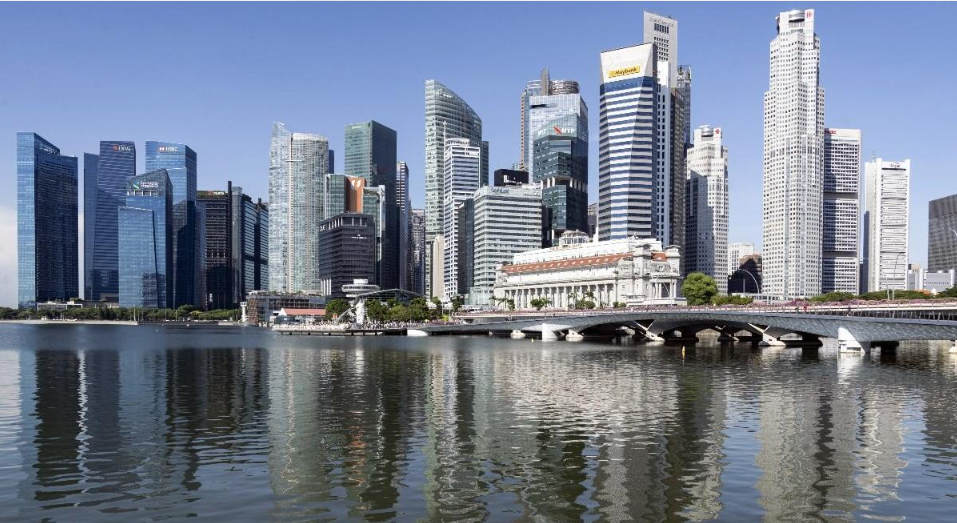
Singapore delivered one of the week’s more encouraging economic announcements. The government raised its 2026 growth forecast to approximately 6%, following a reported third-quarter expansion of 6.1%. The figures highlight the resilience of an economy deeply connected to international commerce, manufacturing and financial services. Singapore’s performance demonstrates that opportunities for growth remain available despite considerable uncertainty across the global economy.
China also attracted international attention on Friday as authorities announced stronger measures to support domestic capital markets. Chinese blue-chip shares gained approximately 4.2%, recovering from their lowest levels since June 2025. The rebound followed commitments to strengthen market support, including a greater role for state-backed investors. However, the improvement in investor sentiment does not independently establish that China’s underlying economic challenges have been resolved.
Technological competition continues to introduce complexity into the region’s commercial relationships. Nvidia reportedly instructed manufacturing partners to suspend shipments of certain servers to Malaysia, Singapore, Thailand and Indonesia amid uncertainty surrounding American export restrictions. The development illustrates how decisions made in Washington can affect industrial activity across Southeast Asia. Regional businesses must increasingly balance access to advanced technology with their relationships with competing economic powers.
LATIN AMERICA | Brazil Confronts a More Difficult Growth Environment
While Singapore strengthened its economic outlook, Brazil revised its expectations in the opposite direction. The country’s Finance Ministry lowered its 2027 growth forecast to 1.8%, compared with its previous projection of 2.3%. Authorities also increased their inflation expectations, reflecting a more challenging environment for economic expansion. The revisions suggest that Brazilian businesses could enter the coming year facing weaker demand and continued pressure on operating expenses.
Brazil’s government outlined ambitions to improve public finances, targeting a primary surplus of between 1.5% and 2% of gross domestic product by the conclusion of President Luiz Inácio Lula da Silva’s next term. Achieving that objective would require balancing government spending commitments with revenue generation and economic growth. Fiscal credibility remains particularly important for countries seeking to attract international investment while managing significant financing requirements. However, the government’s targets remain objectives rather than achieved results.
For international businesses, the contrast between Brazil and Singapore highlights the limitations of treating emerging economies as a single investment category. Countries possess different industrial strengths, financial structures and economic vulnerabilities. Companies considering international expansion must assess individual markets rather than relying exclusively on broad regional growth expectations. The coming year could reward businesses that approach emerging markets with greater selectivity.
CORPORATE BUSINESS | Black Friday Tests Global Consumer Confidence
Black Friday provided retailers with an important opportunity to assess the financial condition of consumers ahead of the holiday season. American shoppers entered the annual sales event facing persistent inflation and pressure on household budgets. Several economic forecasts anticipate holiday spending growth of between 4% and 6%, although higher prices could account for a considerable portion of that increase. Rising retail revenue should therefore not automatically be interpreted as evidence of stronger underlying consumer demand.
The National Retail Federation expects American retail sales during November and December to increase by 4.2%, reaching slightly above $1 trillion. Nevertheless, retailers face difficult decisions over pricing, promotional strategies and profitability. Businesses offering substantial discounts may attract customers while accepting lower margins. Companies that protect their prices risk losing sales to competitors offering more immediate savings.

Some fashion and consumer brands are questioning whether participation in Black Friday remains commercially beneficial. Italian fashion brand Pinko opted out of the event this year, reflecting concerns about the long-term consequences of frequent discounting. Other businesses are adopting similar approaches to protect brand positioning and profitability. Their decisions illustrate a growing tension between short-term revenue opportunities and the preservation of long-term commercial value.
GLOBAL MARKETS AND ENERGY | A Recovery That Remains Fragile
Global financial markets experienced another turbulent week as political developments, monetary expectations and corporate uncertainty influenced investor confidence. American tariff proposals contributed to midweek declines, while questions about technology valuations continued to affect major stock exchanges. The return of Jensen Huang as Nvidia’s chief executive provided temporary relief for technology investors, although concerns surrounding corporate governance and future earnings remained. Markets subsequently recovered across several regions on Friday.
Japan’s Nikkei gained 2.1% during Friday’s session, while European equities and other Asian markets also recorded gains. Nevertheless, the broader performance of global markets throughout November suggests that investor confidence remains fragile. Large movements in individual companies can expose the vulnerability of markets heavily influenced by a relatively concentrated group of businesses. Friday’s recovery should therefore be viewed within the context of a difficult month rather than as confirmation of a sustained turnaround.
Energy markets introduced additional uncertainty as concerns about supply disruptions supported oil prices. Brent crude briefly approached $98 per barrel on Friday before retreating towards $95. Despite the recovery, oil prices remained substantially below their levels at the beginning of November. For transportation companies, manufacturers and retailers, continued energy volatility complicates budgeting and makes future operating expenses more difficult to predict.
THE WEEK AHEAD | Employment, Inflation and Corporate Strategy
Attention will turn towards the United States employment report scheduled for December 4. The figures could provide important insights into the strength of the American labour market and influence expectations before the Federal Reserve’s December 8–9 policy meeting. Businesses will also continue assessing the consequences of Washington’s proposed tariff measures. These developments could shape financing decisions, currency movements and commercial expectations as companies finalize their plans for 2027.
THE ABE TAKE | Growth Must Be Supported by Resilience
This week’s developments reveal a global economy that is neither experiencing uniform decline nor enjoying a synchronized recovery. Singapore’s stronger outlook demonstrates that meaningful growth opportunities remain available, while Brazil’s revised projections illustrate the difficulties confronting other markets. Consumer spending continues to support commercial activity, but inflation complicates the interpretation of rising retail revenues. Financial markets are recovering from periods of weakness without fully resolving the uncertainties that contributed to them.
For corporate leaders, the central challenge is determining where and how to pursue growth. Businesses must evaluate the reliability of their supply chains, the affordability of financing and their ability to withstand unexpected changes in consumer demand. International expansion can create valuable opportunities, but excessive dependence on individual markets or suppliers may expose companies to unnecessary risks. Financial discipline and operational flexibility are becoming increasingly important components of corporate strategy.
As December approaches, the international business community faces important decisions that will influence performance throughout 2027. Companies that distinguish temporary market movements from lasting structural developments will be better positioned to respond to changing conditions. Economic uncertainty does not eliminate commercial opportunities, but it increases the importance of understanding the risks associated with pursuing them.
The defining business question as 2027 approaches is not simply which companies can grow the fastest. It is which companies can build the resilience required to sustain that growth.
Understand More. Think Bigger.